
What to Wear to a Scottish Wedding as the Bride, Groom, Groomsman or Guest

If you’ve been invited to a Scottish wedding, or will soon be walking down the aisle yourself, you may be a bit unsure when it comes to the dress code. And I’ll let you into a little secret - most people often are! With so many choices, it can be difficult to find what’s right for you.
But don’t worry! We’re here to help. Over the years, we’ve helped so many attendees find their dream Scottish wedding attire. From overwhelmed bride-to-be's, confused grooms and fashion-conscious friends of the happy couple.
To help out future wedding-goers, we thought we’d create an official guide to what to wear to a Scottish wedding. And just so you know - it doesn’t always have to be a kilt!
Scottish Wedding Attire Ideas
Here at Gordon Nicolson Kiltmakers, we live and breathe tradition. So much so that most of us could probably tell you the history of a particular tartan from across the street. That said, we also know that a wedding is a party - not a museum exhibit. So, whether you want to go full Highland formal, are looking for a more relaxed, contemporary vibe, or want something in between - Louise Nicolson, our Creative Director, is here to help.

What Should the Groom Wear at a Scottish Wedding?
If you’re the husband-to-be, your wedding day is the ultimate time to shine with the help of a well-tailored groom kilt outfit.
Formal wedding kilt outfits
If your wedding is a formal, black tie affair, the Prince Charlie Kilt Outfit is a classic choice. It’s essentially the Scottish wedding suit equivalent of a tuxedo. It’s iconic, sharp, and best paired with a wing collar shirt and bow tie.
To really look your best and honour Scottish tradition, I’d recommend pairing the Prince Charlie with a dress sporran, Morven hose, black ghillie brogues and sgian dubh to really tie everything together. And for an even more traditional look, why not add a tartan fly plaid for extra flair.
Prince Charlie Kilt Outfit - available to hire from just £95
Top tip: If you’re going full traditional with a sgian dubh (the little knife you tuck into your kilt hose), safety is key. Always keep the blade inside its sheath, make sure it’s tucked into the inside of the hose on your dominant side and that only the top of the hilt is visible. Also, if you’re flying to the wedding, your sgian dubh has to go in your checked luggage, not your carry-on!


Modern Scottish wedding outfits for him
For a more versatile option that can be worn at both formal and semi-formal Scottish weddings, it has to be the Argyll. The jacket’s distinctive diamond-shaped pattern is typically accompanied by contrasting buttons, which really give it a sharp, tailored look while still feeling less formal than the classic evening styles.
The Argyll is also a great choice for winter weddings thanks to its slightly heavier tweed fabric and more structured design, which provide extra warmth without compromising on style.
Argyll Kilt Outfit - to hire from just £95
Top tip: The most common mistake I see at weddings is kilts being worn too low. Rather than sitting at your waist, a well-fitted kilt should sit at your belly button, and the bottom should hit the top of your kneecap. If your knees are completely covered, you’re wearing a skirt. Pull it up!


Scottish wedding outfits without a kilt
Although so many of us Scots love a kilt, we know they’re not for everyone - and that’s okay! Scottish wedding outfits without a kilt are becoming increasingly popular, especially among modern grooms who want to honour tradition while keeping a more tailored, understated look.
Trews (also known as tartan trousers) are the perfect kilt alternative for a wedding, offering the same heritage feel as a kilt but in a style that feels more familiar. Available in a wide range of tartans, trews are incredibly versatile and can be styled to suit the formality of any celebration.
For a traditional look: Pairing trews with a Prince Charlie jacket is the most traditional approach, creating a silhouette that’s every bit as sophisticated as a full kilt outfit.
For a more contemporary feel: We see more and more men opting for a velvet jacket paired with trews, or full tweed suits. These are really smart, modern looks that work so well for winter weddings and evening receptions, offering rich textures that make you stand out from the crowd.
Trews Outfits - available to hire from just £125


Should I hire or buy a kilt for my wedding?
This is one of the questions we get asked the most, and our answer changes depending on each individual’s circumstances. If you think you’ll wear your kilt again at future weddings or events, or would like to be able to pass it down to future generations and keep it as a reminder of your special day - you should buy. If the wedding is a one-off event, your body shape is changing or you’re on a tight budget, hiring is your best bet.
Top tip: If you decide to buy, be sure to give your kiltmaker plenty of time, ideally at least 20 weeks before the big day for hand-sewn kilts and 8-10 weeks for hybrid options.

What Should Groomsmen Wear?
One common question we get asked is whether or not all members of the groom’s party should match. The answer is, like most things wedding related; it’s completely up to the bride and groom. But here are the two options:
A uniform look: Many weddings opt for the groom and his party all wearing the same tartan, whether that’s all kilts or a mixture of kilts and trews in the same tartan. This looks really cohesive in group photos and creates a strong sense of unity. If the groomsmen don't have a specific clan tartan, hiring a universal tartan like the Black Watch for the whole group is a popular choice.
- A more individual approach: It’s also perfectly traditional for each man to wear his own family tartan. This mismatch is actually very authentic to Scottish gatherings. But to keep the group looking cohesive, we recommend that everyone wears the same style of jacket or matching tartan rose buttonholes.

Scottish Wedding Attire for the Bride
While the groom has the kilt or trews, the bride has a wonderful amount of flexibility when it comes to adding a touch of Scottish heritage to her look. Rather than overshadowing the gown, modern Scottish bridal style is all about subtle, meaningful accents.
Tartan Shawls & Stoles
Tartan shawls are by far the most popular bridal accessory we see. If you’re preparing for an autumn or winter wedding, or looking for something to keep you warm during outdoor photos, a shawl is a must. It can be draped elegantly around the arms and mid-back to keep the front of your dress visible, or wrapped closely once the sun goes down.
Bridal Shawls and Stoles - From £149
Subtle Tartan Accents
If you want to honour tradition without the commitment of a full sash, there are several quirky and contemporary ways to incorporate tartan into your bridal outfit:
A tartan sash belt: Instead of the traditional shoulder drape, a tartan sash worn as a waist belt can add a beautiful pop of colour to a simple bridal gown.
Shoe details: We’ve seen brides use tartan ribbons for shoe ties or hidden lining, providing a subtle nod to their heritage.
A bouquet wrap or tartan bouquet: Some brides choose to wrap the stems of their bouquet in a ribbon of their family tartan, while others opt for tartan rose bouquets, allowing them to keep them forever.
- Handfasting ribbons: If you’re having a traditional handfasting ceremony, using bespoke ribbons in your chosen tartans is a beautiful, visual way to truly tie the knot. They also make for a lovely keepsake after the wedding.


Traditional tartan Sash
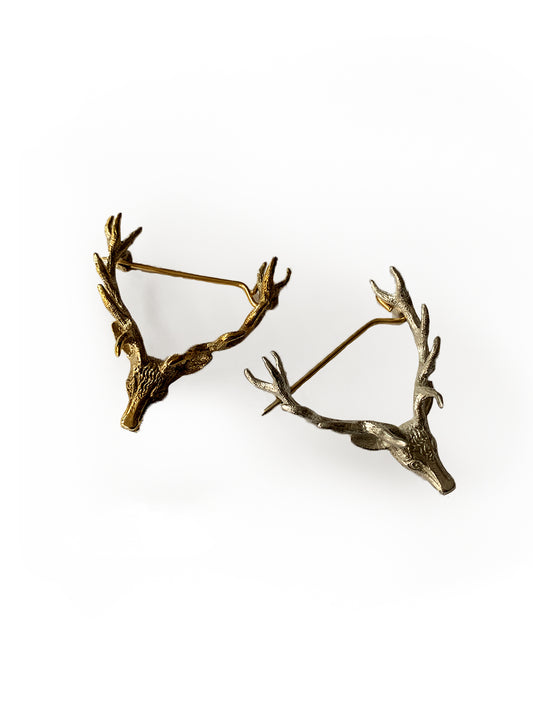
The traditional tartan sash (worn over the shoulder and fastened with a brooch) is still a beautiful option for those who want a high-impact heritage look. Traditionally, it symbolises the joining of families, worn in the groom’s tartan if the bride is taking his name, or her own family tartan to celebrate her lineage.
Tartan Sash - From £58
Top tip: To honour a much-loved Scottish tradition, pop a sprig of white heather in your bouquet. It’s a delicate addition said to bring good luck and protection to your marriage.


What should male guests wear?
Is it okay to wear a kilt if you’re not Scottish?
This is the most common question we get asked and the answer is always a resounding yes!
In Scotland, wearing a kilt is seen as a sign of respect for both our culture and the occasion. We don’t care where you’re from, if you wear a kilt with an appreciation of Scottish heritage, you’re more than welcome to join the party.
If you don’t have a specific clan connection - don’t worry. You can choose a universal or district tartan instead, such as the Black Watch or John Muir Way. These are designed to be worn by anyone, regardless of their lineage.
Black Watch Kilt Hire Outfit - Available to hire from £95
John Muir Way Kilt Outfit - Available to hire from £95
Top tip: If you’re not sure about forking out for a full kilt outfit as a wedding guest, you can always hire just the kilt only. Prices for a high quality kilt only hire typically start at around £55, making this a much more affordable option for those on a budget.


Do I have to wear a kilt to a Scottish wedding?
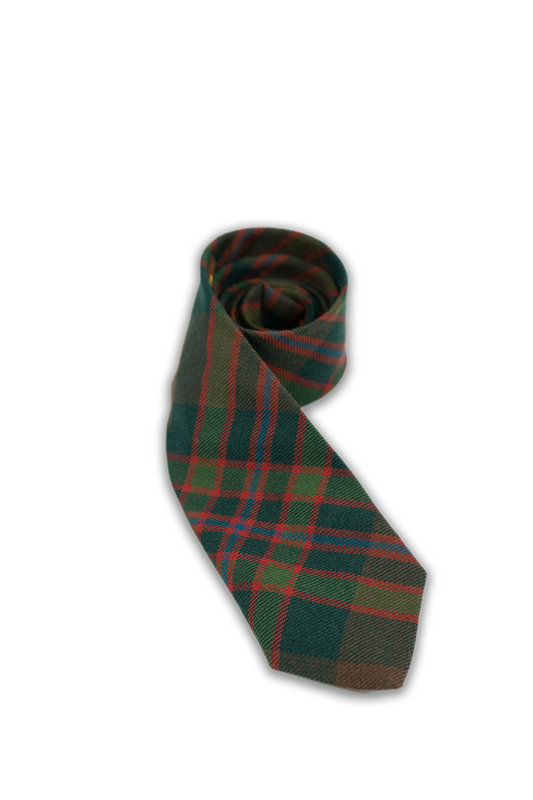
Absolutely not! Unless a kilt has been explicitly specified by the bride and groom, it’s definitely not a requirement for a Scottish wedding. Tartan Trews (trousers) are an excellent alternative to a kilt, or for a more subtle look, a tartan pocket square, tie or rose can be just as effective.

How about female wedding guests?
There’s so much versatility when it comes to Scottish wedding guest attire for women. Tartan sashes, brooches, shawls and capes are some of the most popular accessories to wear over a dress, but in recent years we’ve seen a big increase in women wearing kilts too, which is a fantastic way to both embrace and put a twist on tradition.
For something a little more subtle, a tartan clutch bag is a brilliant option, bringing practicality as well as style to your outfit.
Practicality is also a must when it comes to shoes. So many Scottish weddings are held at castles and barns, requiring you to walk through uneven terrain, cobbled paths and grass verges. As beautiful as stilettos may look, after a prosecco (or three) they can quickly become a bit of a hazard!
Instead, I recommend opting for a block heel, wedge, or even a dressy pair of flats. That said - if you simply can't resist a high heel, keep a pair of emergency flats in your bag - you’ll thank yourself during the ceilidh at the end of the night!
Top tip: Just like any other wedding, the golden rule still applies: don’t wear white or cream! If you do want a light, neutral palette, opt for soft greys, beiges or icy blues.


What should kids wear to Scottish weddings?
The options for children are very similar to those for adults - perhaps just minus the Sgian Dubh to avoid any accidents! Children's kilt outfits are also mediumweight rather than heavyweight, making it much easier for little ones to play and dance around without feeling weighed down.
How about pets?
VIPs (Very Important Pets) are increasingly making star appearances at so many weddings, so it makes sense to make sure they’re looking the part, too! Tartan bowties and slide-on bandanas in the wedding's official tartan are the perfect way to complement the bridal party in photos and give your pooch the star moment they deserve.


Bend the rules!
Here at GNK, we love tradition, but we also love personality. If the bride and groom are happy with a more laid-back vibe, don't be afraid to add a twist to your Scottish wedding outfit.
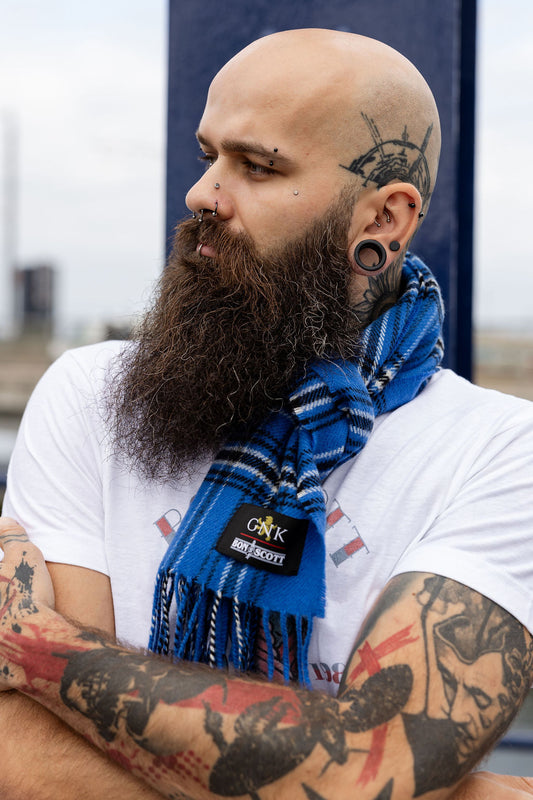
Whether that’s pairing a kilt with some rugged boots instead of traditional ghillie brogues, or opting for a kilt that reflects a hobby of yours, such as the Bon Scott Heritage Tartan Kilt in memory of AC/DC’s late front man or even the official Xbox Tartan Kilt.
The most important thing to make sure of when figuring out what to wear to a Scottish wedding, is that you feel like yourself. As kiltmakers, of course we love to help people look sharp in outfits that are tailored to perfection - but we also want you to feel comfortable having that second helping of haggis and dancing til 2am!


Want some help?
If you’re not sure what to wear, pop in and see us either at our hire shop on the Royal Mile or our Canongate shop, where a member of our made-to-measure team will guide you through your options. We’ll get the measuring tape out, have a chat about your tartan, and make sure you’re the best-dressed person in the room, after the bride, of course.


